

Home / Modules / Examinations & Results
From the question paper to the degree, with every answer script marked without a name on it.
Examinations & Results runs the whole exam cycle for a single School or a University with hundreds of affiliated Colleges. Secure papers, fair evaluation, accurate CBCS results, verifiable documents and examiner payments, in one module.
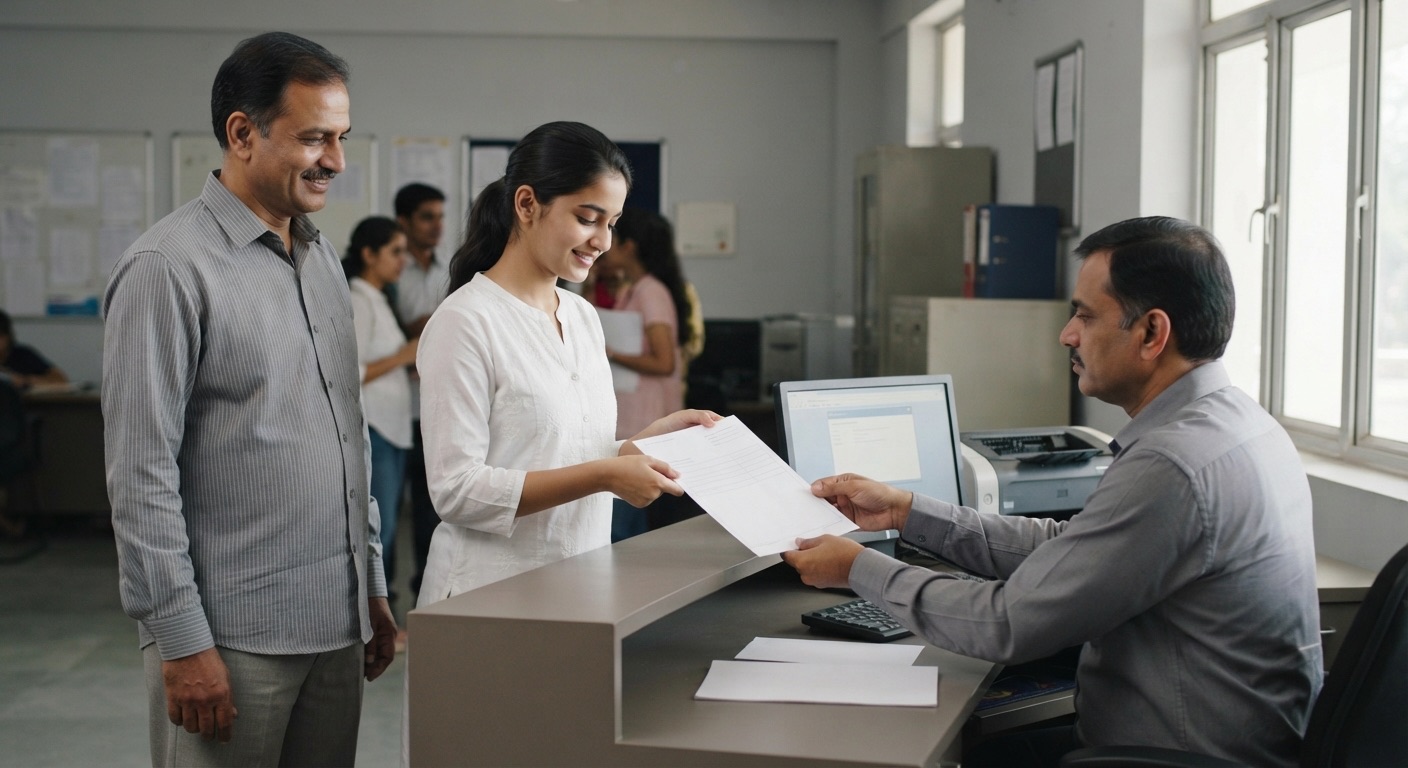
Answer script, Physics, Paper 2
Nine steps from the exam cycle to the examiner's cheque.
Each step hands its work to the next, so the paper, the marks and the payment all come from the same record.
Plan the cycle
The exam session, timetable and fee.
Set and secure the papers
Written to a blueprint, moderated, then locked.
Students register
Exam form, fee paid, eligibility checked, hall tickets issued.
Conduct the exam
Centres, rooms and seats allotted, incidents recorded.
Evaluate fairly
Scripts coded, so no evaluator sees a name.
Publish results
Grades, SGPA and CGPA worked out, then gazetted.
After the result
Re-evaluation, supplementary exams and grievances.
Issue documents and degrees
QR-verified, and lodged in DigiLocker.
Pay the examiners
From verified work only, with tax handled.
Every part of the exam cycle, from the first registration to the last payment.
Each block below covers one stage of the cycle. The same record runs through all of them.
Students register, pay and get their hall tickets without a queue.
The exam form is filled online and the fee is paid at the same time. Eligibility is checked automatically, and hall tickets are issued only to students who pass the check.
- Exam cycles, the date sheet and exam types: regular, supplementary, improvement and back paper.
- Online exam forms with fee payment.
- Automatic eligibility checks: attendance, fee dues and so on.
- Hall tickets and admit cards.
- Exam fees by programme, with late fees and exemptions.

Exam form, Semester 4

Paper, Physics, Paper 2
Papers are written to a blueprint, reviewed, and locked before they leave the office.
Paper setters and moderators are appointed with confidentiality. Each paper follows a blueprint of marks, units, difficulty and thinking level, and the final paper is locked and sent securely for printing.
- Appoint paper setters and moderators, with confidentiality.
- Paper blueprints: marks, units, difficulty and thinking levels.
- Paper moderation and finalisation.
- Secure printing and dispatch of papers to centres.
- Online papers through the Assessment Engine.
Run the exam day from one console, with centres, seats and incidents in view.
Centres and seats are allotted by the candidate's preferred city. The superintendent sees attendance, stationery and incidents on the day, and any unfair‑means case goes through a recorded hearing.
- Exam centres, centre allotment by the candidate's city preference, and room and seat allotment.
- Centre readiness checks and certification.
- A superintendent console for the exam day: attendance, stationery and incidents.
- OMR sheets and OMR scoring.
- An answer‑key challenge window for objective exams.
- Unfair means: record cases, hold hearings and decide penalties, including debarment.
- Computer-based tests through the Assessment Engine.
- Recruitment exams for hiring: exam stages, OMR, cut-offs, a reservation roster, merit lists, an answer‑key challenge window and allotment.

Centre, Hall 3
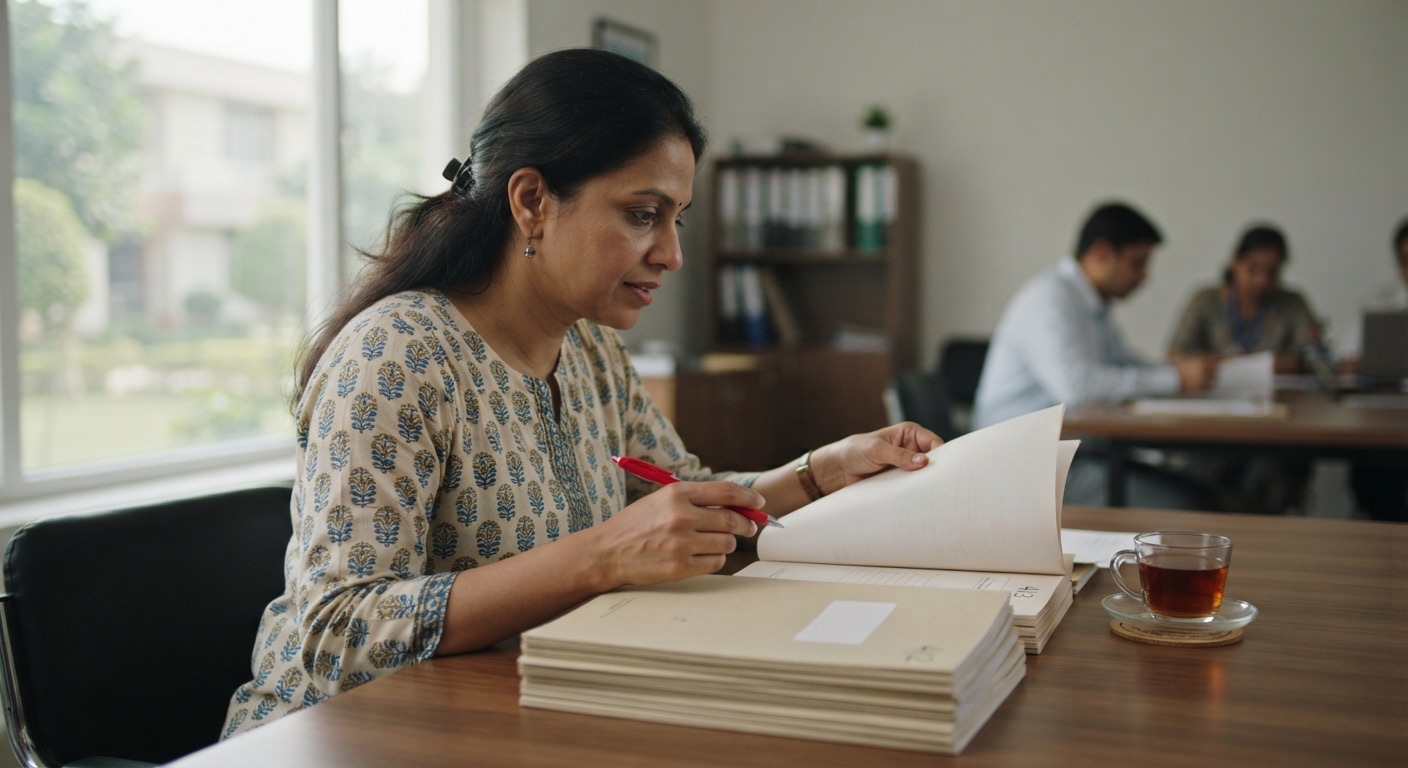
Evaluation, Chemistry
Evaluators mark the work, and never learn whose work it is.
Each answer script is coded when it arrives, so the evaluator sees a code and never a roll number. Marks are entered, checked, and decoded only after evaluation is complete.
- Anonymous evaluation: answer scripts are coded, so evaluators never see roll numbers.
- Evaluator allotment, mark entry, double evaluation and checking.
- Award sheet import.
- Decoding and tabulation only after every mark is in.
- Practical and internal marks from affiliated Colleges.
Results are worked out under CBCS rules, and ranked fairly.
Credits, grades, SGPA and CGPA are worked out automatically, using the institution's own grading scale and its own rules for grace marks and exemptions. The results go out on a gazette, with ranks and merit lists.
- Result processing with the institution's own grading scale.
- CBCS: credits, grades, SGPA and CGPA worked out automatically.
- Electives: offerings, rules and student choices.
- Grace marks, exemptions and moderation rules.
- Result gazette and publication.
- Ranks, merit lists and toppers.
- Result analytics: pass percentages, subject-wise performance and trends.

Result, Semester 4

Re-evaluation request
After the result, the student can ask again, and the answer is recorded.
A student can ask for a re-evaluation, a re-totalling or a photocopy of the answer script. Supplementary exams are scheduled from the same record, and grievances about results are handled in the open.
- Re-evaluation, re-totalling and photocopy of answer scripts.
- Supplementary exams.
- Student grievances about results.
A degree that anyone can check, with the right signatory on every document.
Marksheets, transcripts and certificates carry digital signatures from the right signatory, and a QR code that anyone can scan to confirm the document is genuine. Each one is also lodged in the student's DigiLocker.
- Marksheets, transcripts, provisional certificates, migration certificates and degree certificates.
- Provisional eligibility certificates for students from other boards, with a list of recognised boards.
- Digital signatures, with the right signatory for each document.
- QR-code verification, so anyone can check that a document is genuine.
- National Academic Depository: documents lodged in the student's DigiLocker (APAAR for Schools, ABC for higher education).

Verification

Convocation, this year
From the last result to the convocation stage, in one place.
Graduating students register for convocation, and the gowns, the seating and the degree list are planned from the same records as the results.
- Convocation: registration, gowns, seating and the degree list.
Affiliated Colleges send their marks in, and the University sees one record.
Each affiliated College submits its internal and practical marks, attendance and exam forms to the University, forwards student applications, and handles its own dispatches, and sends its exam‑fee money on to the University.
- Colleges submit internal and practical marks, attendance and exam forms to the University.
- Colleges forward student applications and handle dispatches.
- College results, and exam‑fee money sent by Colleges to the University.

College submissions

Report cards, Class 8
Schools get the same record, with marks and report cards that generate themselves.
Exam schedules are set up for each class, marks are entered for each subject, and the report card is generated from those marks.
- Exam schedules, marks entry for each subject and report cards generated automatically.
Examiners are paid for the work they did, and only for that work.
Pay is calculated from verified work: scripts marked, papers set, papers moderated and centre duties. Each payment goes through approval and TDS is deducted under section 194J for each person and financial year.
- Rate cards and payment caps set by the Controller of Examinations.
- TDS (194J) deducted automatically and kept for each person and financial year.
- Payment runs with approval, and bank payment files or direct online payout.
- Travel and daily allowance claims.
- Examiners see their own earnings.

Examiner payment, September
What sets the module apart from a spreadsheet and a printing press.
Each of these is part of the module, not a process the office has to keep by hand.
- The wall. Evaluation is anonymous, and results stay locked until the right moment.
- One system for the University and all its Colleges.
- Documents nobody can fake. QR verification, and DigiLocker lodging.
- Examiners are paid fairly and on time, only for verified work, with tax handled.
- From a School report card to a University convocation, it is one module.
Examinations & Results is connected to the rest of the institution.
Eligibility for an exam depends on attendance and on fees. These modules hold those records.
Built for the people who run the exam, mark it, and sit it.
Each role sees the part of the cycle that belongs to it.
The Controller of Examinations and the exam branch
Run the whole cycle, from the session to the gazette.
You want every stage on one record.
Paper setters and moderators
Write and review question papers.
You want the paper kept secret until it is printed.
Superintendents and invigilators
Conduct exams at centres.
You want attendance and incidents recorded as they happen.
Evaluators and head examiners
Mark answer scripts, on paper or on screen.
You want to mark the answer, not the person.
College principals and exam coordinators
Handle their College's part of the cycle.
You want your College's marks and forms to reach the University without a second copy.
Students
Register for exams, download hall tickets, see results, apply for re-evaluation and request documents.
You want to know where you stand, and when.
Examiners
See what they are owed and get paid.
You want to be paid for the work you did, on time.
Anyone outside, such as an employer
Verify a certificate online.
You want to be sure a certificate is genuine.
Questions people ask about Examinations & Results.
What does the Examinations & Results module cover?
The whole examination cycle, from setting the paper to the degree certificate: exam registration and hall tickets, secure question papers, exam conduct, anonymous evaluation, CBCS results, re-evaluation, documents and degrees, and examiner payments.
How are answer scripts kept anonymous?
Each answer script is given a secret code, so evaluators never see the roll number. Marks are entered, checked and decoded only after evaluation is complete.
Can results be seen before they are published?
No. Results stay locked until every mark is in and the right time has come. Nobody can see them before then.
How can an employer check a degree certificate?
Anyone can check a document with its QR-code verification. Documents are also lodged with the National Academic Depository in the student's DigiLocker.
How are examiners paid?
Examiners are paid only from verified work: scripts marked, papers set, papers moderated and centre duties. TDS under section 194J is deducted automatically and kept for each person and financial year.
Does it work for Schools and affiliated Colleges as well as Universities?
Yes. Schools get exams, marks entry and report cards. Affiliated Colleges send internal and practical marks and forms to the University, and a University with hundreds of Colleges runs them in one system.